AFRICAN FAMILY FILM FOUNDATION is a 501(c)(3) nonprofit educational organization committed to bringing inspiring images of Africans to educational institutions, community groups and the media. Our film projects aim to provide the public with engaging, enlightening and uplifting portraits of Africans and their cultures.
We are dedicated to raising people’s consciousness and appreciation of African culture worldwide.
We attract and receive support as a result of screenings and exhibitions in public venues, through outreach and by direct appeals to individuals and publicly supported institutions. Our award-winning films are in libraries, schools, colleges, universities, archives, museums and community centers in 35 states and fourteen countries.
Proceeds from film sales support the ongoing activities of African Family Film Foundation. We have a very low-cost, bare bones, no nonsense operating base run entirely by volunteers.
We welcome your contributions to the production and distribution of these award-winning documentary films. Right now you can show your support for African Family Film Foundation’s current film project—completion of the feature documentary ZAM ZAM.
Donate to African Family
Film Foundation to help us
complete the feature
documentary film ZAM ZAM

Please click here to view the demo for the film ZAM ZAM.
Completing the Circle
AFRICAN FAMILY CHILDREN’S FUND
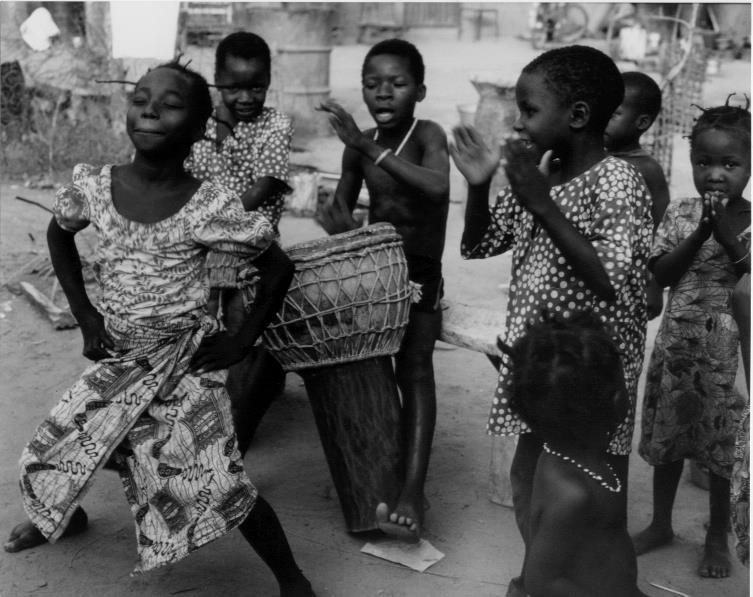
AND we give back to Africa. It’s our way of completing the circle of life, the circle of love, the circle of friendship, the circle of giving and receiving, the circle of continuity. African children dancing in a circle invite you to participate in the circle, the African Family.
Copyright 1983-2015 African Family Films & African Family Film Foundation. All Rights Reserved.
African Family Children’s Fund supports grass-roots projects and primary schools in Africa that teach children ecologically sound skills: sustainable organic farming, reforestation and solar energy production.
Donate to the
African Family Children’s Fund
EDUCATION PROJECT

Through the African Family Children’s Fund, we actively support emergency humanitarian relief for children and families in crisis in Africa: drought, floods, famine and tropical disease.
We provide nutrition (millet, sorghum, beans and corn organically grown in Africa), life-supporting water purification packets (made from salt), organic cotton blankets (hand-woven by African artisans), and non-toxic mosquito nets to prevent vector-borne tropical diseases: malaria, dengue fever, elephantiasis [lymphatic filariasis], river blindness [onchocerciasis] and sleeping sickness [trypanosomiasis]. We engage in the redistribution of wealth while encouraging sustainable organic and permaculture farming—the brightest future for all farming—and the ancient art of weaving cloth.
The Challenge
While the mainstream media focuses on the Ebola crisis in three of Africa’s 55 nations, most of the world is not aware of one of the greatest challenges on earth: mosquito-borne diseases, especially malaria—Africa’s biggest killer—and elephantiasis [lymphatic filariasis]. Note that Ebola is NOT transmitted by mosquitos, nor any other insect.
The good news regarding Ebola: for its inexpensive and effective prevention and cure, please see our blog [click on Blog in menu at the top of this page].
Every day, more than 1,000 children die in Africa from malaria alone. Malaria kills more than 370,000 African children every year! We can prevent this!
Elephantiasis afflicts more than 50 million Africans with horrific swelling and disfiguration of arms and legs and mutilating genital symptoms, usually rendering sufferers disabled for the rest of their lives. We can prevent this too!
The newborn, children, pregnant women, the elderly and those already compromised with an illness or disability are at risk of serious illness and death from a mosquito-borne disease. Many African children and families are in the greatest crisis of their lives.
All of this is happening in one of the least developed regions of the world, where every day is a struggle for survival.
The Most Challenging Region on Earth
The United Nations ranks 187 nations in their Human Development Index, a comparative measure of life expectancy, literacy, education, standards of living and quality of life for countries worldwide. Norway is ranked number 1. The USA is ranked number number 5, but is also ranked number 28 by the Inequality-adjusted HDI.
In West Africa, Cape Verde Islands is ranked number 123, Ghana 138. The other 14 West African nations are ranked between numbers 152 and 187. Ten out of the twenty-one nations of the world with the lowest HDI are West African. Nine out of seventeen are West African. Eight out of sixteen. Seven out of thirteen. Six out of twelve. Five out of eleven. Four out of nine. Three out of the seven nations with the lowest HDI are West African: Burkina Faso is ranked number 181, Sierra Leone is ranked number 183, and Niger is ranked number 187, at the very bottom, the lowest Human Development Index ranking in the world.
Fourteen of sixteen West African nations are among the thirty-six lowest HDI nations. That’s 40% of the 36 lowest HDI nations on the planet! This makes West Africa as a region the most challenging region in Africa and the world.
Paradigm Shift Toward Peaceful Action
African Family Film Foundation is calling for a sea change in world economic priorities, a paradigm shift, a shift away from conflict and war, a shift toward peaceful action, a humanitarian approach toward those with the least, those living on the edge, with inadequate shelter, minimal health care and often limited means of making a living, providing for one’s family, for the children, the elderly, the ill, the disabled, the deaf and the blind.
Imagine how the resources wasted on war could be used for transforming Africa into an oasis of green development, with healthy African families! Imagine happy men, women and children living in harmony! Imagine the good will that would be generated! Imagine bringing PEACE and HEALTH to a billion people on the continent of Africa!
We Can Help African Children
& Their Families Right Now!
African Family Film Foundation, a 501(c)(3) nonprofit organization, is asking you to join us in helping children and their families living on the edge of survival, many of whom do not have a mosquito net to protect themselves from vector-borne diseases, nor a blanket to keep themselves warm at night. During winter months temperatures can drop to freezing at night; during the rainy season the overall daily temperature can be lower than during the winter months. Many children and families are not equipped to deal with the cold. Something so simple as a new locally made cotton blanket and new mosquito net can make a difference and last for years.
To see what we’ve done in the past, please click on “Recent Projects” in the menu bar. Then click on the “read more” button to view the video African Deluge.
Right now, today, you can help us bring hope through direct action!
We have very low operating costs. We are all volunteer.
We have volunteers ready in Ouagadougou, the capital city, and villages of Kouritenga Province, in Burkina Faso, so we can get help directly to people on the ground.
We use donations to buy organic cotton blankets made locally in Burkina Faso and non-toxic mosquito nets, sewn locally—all purchased locally to avoid costly airlifts and waste. This supports the ancient art of African weaving, the existing local economy, and provides relief for children and families who need it.
Our team of African volunteers are ready to buy and distribute blankets and mosquito nets to those in need. They need your help.
Your tax-deductible contribution will buy mosquito nets to protect African children and their families from vector-borne diseases year-round and buy blankets to help them through cold winter months as well as through the cold rainy season in West Africa.
Please Help Now!
Here are some examples of what your money can do:
$10 will buy a locally made blanket that can keep a child warm at night.
$20 will buy a mosquito net that can help prevent malaria, elephantiasis, dengue fever, sleeping sickness and river blindness.
$60 will provide two blankets and two mosquito nets.
$120 will provide four blankets and four mosquito nets.
$150 will provide five blankets and five mosquito nets.
$300 will provide 10 blankets and 10 mosquito nets.
$600 will provide 20 blankets and 20 mosquito nets.
Please help African children and their families by making a tax deductible donation now!
SAVE LIVES—Help
African Children and their Families
Avoid Vector-Borne Tropical Diseases.
Donate to the
African Family Children’s Fund
EMERGENCY RELIEF PROJECT
 Follow